
Table of Contents
Nutrition Timing: When to Eat Before and After Workout is not just about what you eat or when you eat — it’s about understanding what your body truly needs and how nutrition works inside your body to support energy, recovery, and performance.
It is one of the most top trending questions in 2025.Eating right food at right time . Recent sports science shows that aligning your meals and snacks with your workout schedule helps fuel performance, prevent fatigue, and maximize results.
When you want to build lean muscles, stay energized, active and fresh. First of all understand the right time to eat and what your body needs. In this article I will tell you the latest 2025 insights on pre-workout and post-workout nutrition, the best foods to choose, and common mistakes to avoid so you can get the most out of every session.
Why Nutrition Timing Matters for Fitness
Nutrition Timing: When to Eat Before and After Workout plays a very important role in your health and fitness. When you exercise daily, nutrients digest and are used in the best way by your body. When nutrients are properly used, you start feeling many positive changes — more energy, better focus, and faster recovery. In 2025, sports science has put more focus on Nutrition Timing: When to Eat Before and After Workout, especially through circadian rhythm-based meal plans that align food intake with your training schedule for dramatically better results.
Nutrition Timing: When to Eat Before and After Workout also supports key performance goals:
- Energy Boost Before Exercise: Eating the right foods before a workout fuels your muscles, helping you work harder, lift heavier, and run longer.
- Faster Recovery After Training: Consuming protein and carbs shortly after exercise accelerates muscle repair, replenishes glycogen stores, and reduces fatigue.
- Fat Loss & Muscle Gain Balance: Strategic meal timing preserves lean muscle while promoting efficient fat burn; without proper nutrients, your body stores unhealthy weight.
- Hydration & Electrolyte Support: Planning water and electrolyte intake around workouts prevents cramps, boosts endurance, and keeps your skin healthy and youthful.
In short, smart Nutrition Timing: When to Eat Before and After Workout means you’re not just training harder or relying on fancy foods, protein powders, or supplements — you’re training smarter and giving your body what it truly needs.

Pre-Workout Nutrition: What & When to Eat
Feelings of your body are very important because this is the way you see what is the actual need of your body. The pre workout meal helps you train harder, prevents early fatigue, and sets the stage for faster recovery.in 2025 experts concluded that timing and food quality play a very important role for your health and fitness.
Ideal Pre-Workout Timing
- 2–3 hours before exercise: Eat a balanced meal with complex carbs, lean protein, and a small portion of healthy fats. This gives your body enough time to digest and convert food into usable energy.
- 30–60 minutes before exercise: Choose a light snack that’s easy to digest—mainly carbs and a little protein. Avoid heavy, fatty meals that can cause bloating or sluggishness.
- Fasted training trend: Some athletes still prefer fasted cardio, but studies in 2025 suggest it’s better for short, light sessions rather than strength or endurance workouts.
Best Foods to Eat Before Workout
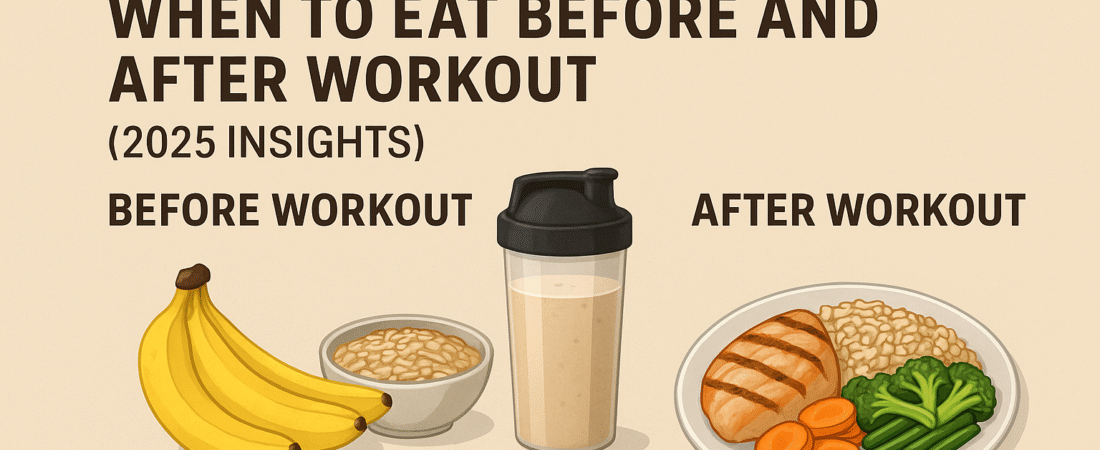
Carbs for Energy: Oats, bananas, whole-grain toast, brown rice.
Protein for Muscle Support: Eggs, chicken breast, Greek yogurt, protein shake.
Healthy Fats in Moderation: Avocado, almonds, peanut butter (only in small amounts).
Hydration: A glass of water or coconut water to avoid dehydration during training.
Quick Pre-Workout Snack Ideas (Table)
| Timing | Snack/Meal Example | Why It Works |
| 2–3 hrs bef | Grilled chicken + sweet potato + veggies | Balanced carbs & protein for long-lasting energy |
1 hr before | Banana + whey protein shake | Quick fuel + muscle protection |
30 min before | Oats with honey or dates | Fast energy without heaviness |
AI-based fitness apps now analyze your training schedule and suggest meal timing for your body type and goals. Using these tools helps customize your pre-workout fueling even further.
Post-Workout Nutrition: Recovery Fuel
The things that you eat after decides how fast your body recovers, how much muscle you build, and how well you prepare for your next session.in 2025 nutritionist expert studies confirm that the quality, type, and timing of post-workout meals are crucial for both beginners and athletes.
Timing After Workout
The 30–60 Minute Window: Known as the anabolic window, this is when your muscles absorb nutrients the fastest. Eating protein and carbs within this time improves muscle repair and glycogen recovery.
For Busy Schedules: If you can’t eat right away, have at least a small protein-rich snack or shake. Then, follow up with a full balanced meal within 2 hours.
For Different Training Levels:
Casual gym-goers can focus on a normal healthy meal within 1–2 hours.
Athletes or heavy lifters benefit from quick-absorbing protein and carbs right after exercise.
Best Foods After Workout
Proteins (muscle repair): Whey protein, chicken breast, eggs, tuna, tofu.
Carbohydrates (glycogen restore): Brown rice, quinoa, potatoes, oats, bananas.
Healthy Fats (hormone balance): Olive oil, nuts, chia seeds (in moderation).
Hydration & Electrolytes: Coconut water, lemon water, or electrolyte drinks.
Sample Post-Workout Meal Ideas
| Goal | Example Meal | Why It Works |
| Muscle Gain | Grilled salmon + quinoa + veggies | High protein + complex carbs for muscle recovery |
Fat Loss | Egg white omelet + spinach + 1 slice whole-grain toast | Protein-rich, low-calorie, keeps you full |
Quick Recovery | Banana + whey protein shake | Fast-digesting carbs + protein for immediate recovery |
Hydration Boost | Coconut water + handful of nuts | Replenishes electrolytes + healthy fats |
Pro Tips (2025 Insights):
Pair fast-digesting carbs with protein immediately after workouts to speed recovery.
Use AI tracking apps to adjust post-workout meals according to calorie burn and muscle recovery rate.
Avoid high-fat heavy meals right after exercise. They slow down digestion of protein and carbs.
Special Nutrition Timing for Different Goals
Nutrition Timing: When to Eat Before and After Workout is not the same for everyone because not every nutrition plan fits every body. Each fitness goal requires a different approach. The way you eat before and after your workout or exercise reflects your overall health and fitness. Your weight gain or weight loss both indicate whether your Nutrition Timing: When to Eat Before and After Workout is right or not. In 2025, nutritionists observe that Nutrition Timing: When to Eat Before and After Workout, when personalized for each individual, improves performance, maintains consistency, and delivers long-term results.
Nutrition Timing for Weight Loss
Before Workout:
Light, protein-rich snacks like boiled eggs, Greek yogurt, or black coffee with a banana.
Aim to eat 30–60 minutes before to avoid heavy digestion.
After Workout:
High-protein, moderate-carb meals (e.g., grilled chicken + salad + ½ cup quinoa).
Skip sugary recovery drinks unless training is intense.
Intermittent fasting paired with workouts is trending in 2025, but it should be done under guidance.
2. Nutrition Timing for Muscle Gain
Before Workout:
2–3 hours before: balanced meals with complex carbs (brown rice, oats) + lean protein (chicken, eggs).
30 min before: whey protein shake + fruit for quick energy.
After Workout:
The “anabolic window” matters more here. Protein + high-carb meals (e.g., salmon + rice + veggies) within 60 minutes.
Distribute protein evenly across the day (20–40g per meal) for best hypertrophy results.
3. Nutrition Timing for Endurance Training

Before Workout:
Carbohydrate-focused meals 2–3 hours before (pasta, whole-grain bread, potatoes).
Pre-race snacks (energy gels, bananas, electrolyte drinks) 30–45 minutes before.
After Workout:
Replenish glycogen quickly with fast-digesting carbs (white rice, fruits) + lean protein.
Hydrate with electrolytes to restore mineral balance.
Carbohydrate loading before long runs or cycling events is still effective, but in 2025, athletes pair it with AI-guided hydration plans for peak results.
Weight loss: Light meals, protein focus, avoid excess carbs
Muscles gain Balance of carbs + protein before, protein-heavy meals after.
Endurance Carb-rich meals before and after, hydration is the game-changer.
The next main section will be “Common Mistakes in Nutrition Timing” . Yeh section SEO ke liye bhi acha hai aur audience ko attract karega kyunki log galtiyan avoid karna chahte hain.
Common Mistakes in Nutrition Timing
People can make many mistakes in nutrition timing and these unbearable mistakes for the body can lead to errors in health and fitness and goal.in 2025 it is observed common timing for health and fitness can slow down progress, affect recovery, and even lead to unnecessary weight gain.
1. Skipping Meals Before Intense Workouts
Working on an empty stomach may work for light cardio, but for strength training or endurance sessions, it can lead to fatigue and muscle breakdown. Some people feel too much weakness.
for more health and fitness tips click the green button link below and read article carefully on HealModeX. com
2. Eating Heavy, Fatty Meals Right Before Exercise
Foods high in fat or fried meals take longer to digest, often causing sluggishness, cramps, or discomfort during training.
3. Ignoring Hydration
Many focus only on food but forget that water and electrolytes are equally important. Dehydration lowers performance and increases recovery time.
4 .Delaying Post-Workout Meals Too Long
Waiting several hours after exercise without eating slows down glycogen restoration and muscle repair.
5. Relying Only on Supplements
Protein shakes and pre-workout powders can help, but they can’t replace balanced whole foods that provide vitamins, minerals, and fiber.
The biggest mistake is following generic plans without considering your body type, workout intensity, and personal goals. AI-based fitness apps and trackers now help avoid these mistakes by adjusting your nutrition timing automatically.
Expert Tips for 2025 on Nutrition Timing: When to Eat Before and After Workout
Nutrition timing does not mean what you eat before and after a meal and how it affects your workout. In 2025 there are many technologies discovered like athletes, gym-goers, and even casual fitness enthusiasts plan their meals and how they transfer their body.
Use AI-Powered Fitness Apps
AI apps now track your workouts, sleep, and energy levels to recommend the exact time to eat your meals.
These apps also suggest whether you should have a light snack or a full meal, based on your body’s condition.
Sync Meals with Circadian Rhythm
Studies show that eating in line with your body clock enhances fat loss and recovery.
Morning workouts → focus on carb + protein meals.
Evening workouts → go lighter on carbs, add more protein and healthy fats.
Intermittent Fasting + Workout Timing
Popular in 2025: Many fitness enthusiasts schedule workouts during their fasting window’s end, then break the fast with a protein-rich meal.
This helps in fat loss while still maintaining muscle mass.
Hydration is More Than Just Water
Athletes now use smart bottles that track hydration levels.
Electrolytes (sodium, potassium, magnesium) are essential, especially in hot climates like Pakistan.
Personalized Recovery Meals
Instead of generic shakes, people are customizing recovery meals with local, affordable options:
Banana + lassi for carbs & probiotics.
Daal + roti for balanced protein & fiber.
Dates + milk for natural sugar + protein combo.
The future of fitness is personalized nutrition timing. By combining science, AI apps, and smart eating habits, you can maximize every workout’s benefits without overcomplicating your diet.
Conclusion:
Nutrition before and after work out is not a trend. It is actually your health and fitness goal. Eating food and taking nutrition at the right time keeps you active, fresh and boosts your metabolism and you achieve your fitness goal.
Before workouts: Focus on carbs + protein to power performance.
After workouts: Prioritize protein + carbs to repair muscles and restore energy.
For weight loss, muscle gain, or endurance: Adjust your meal timing and portion size according to your goal.
In 2025, fitness is no longer about guessing—AI apps, smart hydration tools, and personalized plans make it easier than ever to time your meals correctly. But remember, everybody is unique. Experiment, track your results, and listen to your body’s signals.
For more science-based health tips, check out other HealModeX fitness guides.
If you’re already improving your Nutrition Timing: When to Eat Before and After Workout, don’t forget to focus on your environment too. The gear and space you train in matter just as much as what you eat. Discover how you can make your workouts sustainable and planet-friendly in our latest guide — Eco-Friendly Home Gym Gear Trends 2025. Learn how switching to natural materials, energy-saving equipment, and smart fitness setups can help you achieve your health goals while protecting the Earth.