
Table of Contents
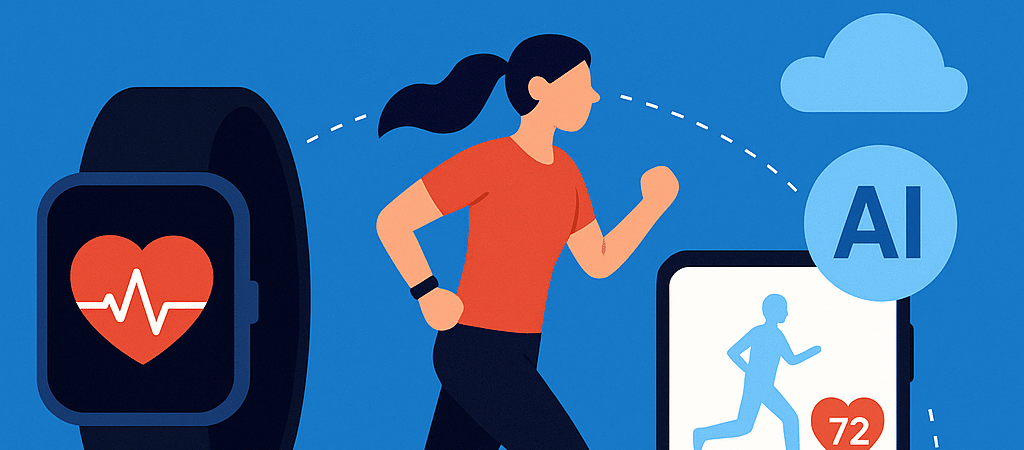
In 2025, fitness is not just about joining an expensive gym or following a strict diet plan — it’s about staying connected with wearable fitness tech in 2025 and Artificial Intelligence (AI). From smartwatches that monitor your sleep and heart rate to AI-powered apps that create personalized workout plans, wearable fitness tech in 2025 is transforming into a real health-coaching partner. This new wave of fitness technology makes it easier to track your progress, stay motivated, and achieve long-term wellness goals through smart, data-driven insights.
Nowadays health and fitness is not very difficult in this era.With every heartbeat, calorie, and step recorded, Artificial Intelligence (AI) learns from your habits and designs routines that fit your goals. Technology does not just give you progress only. It also helps to motivate you, teaches you and totally evolves you.
Give thanks to your smartwatch on your wrist because it is very beneficial to your health and fitness and it is a long term health blend.AI + wearable fitness is setting a new global standard for personal well-being, convenience, and accountability.
The Rise of Smart Wearable fitness tech in 2025
Over the last few years people have become very conscious about their health and fitness. But wearable technology is very helpful from a simple step counter to a complete personal health ecosystem. Devices like Apple Watch, Fitbit, Samsung Galaxy Watch, and Garmin now do much more than track fitness; they help users understand their body in real time.
In 2025 there will be many technical devices like AI driven sensors that continuously monitor heart rate, oxygen levels, stress patterns, and even sleep quality. They no longer just collect data they analyze and guide you toward better habits.
Technology nowadays helps in health and fitness in many ways. We can set alarms for water, meals, or exercise according to the right time schedule — and if we ever forget, these reminders keep us consistent. Through AI and social media platforms, we now get proper guidelines and expert tips about fitness routines. According to industry forecasts, the global wearable fitness tech in 2025 market is expected to cross $150 billion, showing how fast technology is reshaping personal health care. This growth proves that wearable fitness tech in 2025 is becoming a vital part of daily life, helping millions stay active, balanced, and connected to their health goals.
How AI Is Changing Health Coaching
In 2025 artificial intelligence will be very helpful in smart fitness.it does not track your data. Every step you take, every heartbeat, and even your sleep pattern becomes part of a personal health profile that AI uses to create customized plans.
Nowadays AI fitness apps help you like a savior. They analyze your energy levels, recovery time, and motivation trends to tell you exactly when to train, what to eat, and when to rest. For example, if your wearable detects poor sleep and high stress, the AI may recommend yoga instead of heavy lifting that day.
But the result of AI and smartwatches is that if the use of technology is passive and consistent, AI’s predictive capabilities even alert you to potential health risks by spotting unusual trends early, like irregular heart rates or dehydration signs.
As AI grows smarter, it’s turning fitness into a two-way conversation not just you listening to the coach, but the coach learning from you.
Key Benefits of AI-Powered Wearable Coaching
AI powered wearable is also used for your personal health and fitness. There are some tips to follow.
Personalized Fitness Recommendations
AI studies your activity patterns, sleep quality, and heart rate to craft workouts and nutrition plans made just for you. No more generic fitness advice, it adapts daily to your body’s data.
Real-Time Feedback & Motivation
Your wearable alerts you instantly whether your heart rate is too high, posture is off, or hydration is low. That means you can correct mistakes during your workout, just like a real trainer.
Habit Tracking & Accountability
AI keeps a long-term memory of your progress and encourages consistency. Missed workouts or poor sleep? It motivates you with personalized reminders and mini-goals to stay on track.
Early Health Risk Detection
AI can detect irregular patterns like abnormal heartbeats, oxygen drops, or high stress levels as far earlier than you’d notice. This proactive insight turns your wearable into a mini health-monitoring system
Seamless Integration with Apps & Devices
Modern wearables sync with other platforms (MyFitnessPal, Google Fit, Apple Health, Calm) creating a single wellness dashboard powered by AI.
Continuous Improvement with Machine Learning
Every week, the algorithm refines its coaching style based on your progress, ensuring smarter advice as you evolve.
for more health and fitness tips click the green button link below and read the article carefully on HealModeX. com
Comparison: Traditional vs. AI Coaching
Feature | Traditional Coach | AI-Powered Wearable |
| Availability | Limited hours | 24/7 |
Personalization | Based on observation | Based on real data |
Cost | High | One-time or subscription |
Consistency | Varies | Always active |
| Feedback Speed | Delayed | Instant |
2025 Trends in Wearable Fitness Tech
Wearables Still Top Trend
In 2025 AI fitness is at top trend. American sports institutes like sports colleges prefer AI fitness technology too much.Wearable technology shows that smart watches and apps used very fastly (like exercises apps) are very helpful for older adults.
Why It’s Leading
- Wearables gather massive amounts of biometric data — including heart rate, sleep, recovery, and stress — and enable personalized interventions, shifting the focus from simple “track” to smart “coach.” The demand for wearable fitness tech in 2025 is growing rapidly as more consumers across all age groups are buying fitness trackers, smart rings, and even sensor-embedded garments, expanding the market beyond elite athletes. These devices are no longer standalone; they now link with apps, wellness platforms, and clinical health services, creating a connected ecosystem. This deep integration proves that wearable fitness tech in 2025 is not just a trend but a global movement toward smarter, data-driven health and wellness.
Implications for Your Audience
- Personal Empowerment – Smartwatches, fitness rings, and AI apps are giving users real-time insight into their own health metrics. That means no need to depend entirely on doctors or trainers — people can make informed lifestyle choices every day.
Digital Wellness Lifestyle – In Pakistan and other Asian countries, digital adoption is growing fast. As wearables become more affordable, HealModeX. com readers can learn how to use them effectively, turning gadgets into real coaching tools rather than just fashion accessories.
Top 5 Smartwatches for Beginners in 2025 Affordable & Smart Choices

Amazfit Bip 5 – Budget Champion for Starters
- Price ≈ ₨ 18,000 PKR
- Features: Heart-rate, sleep, and step tracking + Alexa AI.
- Best for: Beginners needing basic health data and a long battery.
- Affiliate tip → Link to Daraz / Amazon.
Huawei Watch Fit 3 – Style + AI Coaching
- Lightweight AMOLED display, AI fitness suggestions.
- Perfect for daily users focused on aesthetic + accuracy.
Redmi Watch 4 – Smart Choice for Students
- Affordable + solid step counter + sleep tracking.
- Syncs easily with Android & iPhone.
Fitbit Inspire 3 – Trusted Accuracy
- Strong data analysis & stress monitoring.
- Pairs with Fitbit Premium AI coach.
Samsung Galaxy Fit 3 – Pro Experience at Entry Price
Best design, high precision, auto workout detection.
Comparison Table
Model | Price (PKR) | Battery Life | Best For | AI Coaching |
Amazfit Bip 5 | 18k | 10 days | All-rounder | yes |
Huawei Watch Fit 3 | 25k | 8 days | Stylish users | yes |
| Redmi Watch 4 | 16k | 12 days | Students | yes |
Fitbit Inspire 3 | 30k | 10 days | Health accuracy | yes |
Samsung Fit 3 | 27k | 7 days | Performance lovers | yes |
Smarter Sensors & Health Insight
In 2025, AI and smart devices are not solely responsible for your health and fitness — they act as your digital helpers to keep you consistent in your daily routine. The wearable fitness tech in 2025 works as a supportive partner that helps you monitor and maintain your wellness goals with precision. Smart sensors and AI health insights hidden inside these devices collect complex signals such as heart rate, oxygen levels, skin temperature, and even biochemical markers. This data is quickly analyzed and transferred to improve your overall performance. The evolution of wearable fitness tech in 2025 proves that technology is no longer just about tracking — it’s about understanding your body and guiding you toward a healthier lifestyle.
Biosensors for Physical + Biochemical Signals
Modern wearable sensors don’t just detect movement or heart rate. They can monitor oxygen saturation (SpO₂), skin temperature, heart-rate variability (HRV), and even biochemical markers like lactate, electrolytes and sweat analytes. → For your blog: Write how a smartwatch or smart ring can detect when your recovery is poor, not just when you’re active.
Real-Time & Continuous Monitoring
These sensors work 24/7, giving a much more accurate view of health in real life (not just in a gym or doctor’s visit). For example, one study emphasises the value of continuous monitoring for proactive health. → Content tip: “Your wristband sees what the doctor’s office misses.”
Early Warning & Predictive Insights via AI
AI algorithms increasingly interpret sensor data to detect early changes in health status — potential cardiovascular risks, overtraining, sleep issues, etc. → Article angle: “How your wearable might flag trouble before you feel it.”
Integrated Lifestyle & Behavior Change Feedback
The sensors feed into apps that nudge you, guide you, and help build healthy habits — e.g., reminders for sleep, hydration, recovery. Wearables are acting more like coaches with data backing. → For your SEO post: Highlight that “smart sensors + AI feedback = your personal health assistant.”
for more health and fitness tips click the green button link below and read the article carefully on HealModeX.com
Wellness, Recovery & Mental Health Focus

With the help of AI and digital signal sensors we can improve wellness, recovery and mental health focus.surrounding peoples not just notice your body language they also feel your mental health and emotions.
From Fitness Tracker to Wellness Companion
Modern wearable fitness tech in 2025, like Fitbit Sense 2, Oura Ring Gen 3, and Samsung Galaxy Watch 6, comes equipped with stress sensors, mindfulness reminders, and guided breathing exercises to improve both mental and physical health. These devices track your Heart Rate Variability (HRV) — a key indicator of stress or recovery — and suggest breathing or relaxation techniques when your levels drop. The advancement of wearable fitness tech in 2025 helps users manage fatigue, prevent burnout, and achieve long-term wellness by recommending lighter workouts or meditation when needed. Overall, wearable fitness tech in 2025 has transformed from a simple fitness tracker into a complete wellness companion that supports recovery, mindfulness, and sustainable health goals.
Sleep Tracking Becomes a Science
Sleep is now treated as the foundation of recovery.
Wearables in 2025 can:
- Detect sleep stages (REM, deep, light) using micro-movement sensors.
- Track oxygen levels and body temperature to assess sleep quality.
- Sync with AI apps that suggest bedtime routines or relaxation sounds.
Tip for your readers: Sleep data helps them find the connection between rest, mood, and performance.
Mental Health Monitoring Through AI Insights
AI now recognizes early mental stress indicators like irregular heartbeat patterns, low activity, or mood swings.
These devices send gentle nudges — “Take a 2-minute walk,” “Practice deep breathing,” or “Hydrate now.”
This proactive feedback helps prevent burnout, anxiety spikes, and energy crashes. Example: Fitbit’s “Stress Management Score” and Apple’s “Mindfulness App” analyze emotional trends over weeks — turning invisible mental strain into visible data.
Holistic Recovery = Mind + Body + Routine
2025’s wearables take a 360° view of health — tracking recovery metrics like:
- Resting heart rate
- Sleep consistency
- Stress response patterns
- Energy levels across the day
This data-driven feedback creates personalized recovery routines, combining nutrition, hydration, and mindfulness.
For HealModeX readers, that means living smarter — not harder.
Integration with Mental Wellness Apps
Many wearables now sync with platforms like Calm, Headspace, or Breathwork, letting users track stress and recovery in one dashboard.
This bridges the gap between physical fitness and mental peace — reinforcing the idea that well-being isn’t just exercise; it’s emotion management too.
What does “Hybrid Fitness & Connected Ecosystems” mean?
Wearable fitness tech in 2025 is making health and exercise smarter than ever before. Wearable fitness apps, smart devices, small gym gear, and even online doctor consultations are becoming part of one connected ecosystem that supports your daily wellness. The wearable fitness tech in 2025 allows you to have a smartwatch tracking your heart rate, a smart bike at home transmitting your ride performance, and the same data syncing into your app to plan your next workout automatically. This hybrid model perfectly blends in-gym and at-home workouts, digital coaching, and real-time feedback from your device. For instance, during a studio session, your wearable fitness tech in 2025 can track performance and instantly share data with you and your trainer for more personalized fitness results.
Diversified Form-Factors: Rings, Glasses, Smart Clothing
The wearable category is expanding:
- Smart rings: small, discreet, health-focused.
- Smart glasses: combining AR/VR + fitness tracking.
- Smart clothing / e-textiles: sensors embedded in garments.
This gives you a rich angle for your article: “Beyond the wrist: the future of fitness wearables”.
Future of AI-Driven Health Coaching
AI and health coaches play a very important role in human beings and nowadays it is becoming a part of living organisms that also produce many things. It’s becoming more human-like, emotionally aware, and deeply personalized. The next generation of AI health systems will combine data science, behavioral psychology, and emotional intelligence to guide people toward lasting wellness.
1. Predictive Health Insights: Prevention Before Cure
AI is evolving from reactive tracking to predictive wellness.
- Using years of data — heart rate, sleep, nutrition, and mood patterns AI can forecast possible health risks before they occur.
- For instance, if your wearable detects early fatigue trends or rising stress patterns, the AI might suggest hydration, rest, or meditation before symptoms appear.
- This predictive ability will turn wearables into early-warning health systems potentially reducing lifestyle-related illnesses.
Example: Imagine getting an alert: “Your heart rate variability is lower than usual — take a light recovery day.”
Hyper-Personalized Coaching Through Deep Learning
In the future, every user will have a unique AI model built on their lifestyle, environment, and genetics.
- Deep learning will enable wearables to understand how your body reacts differently than others.
- AI will adjust training, diet, and recovery plans in real time — like a personal trainer and nutritionist combined.
- Expect apps that auto-plan your week, considering your sleep, work schedule, and even mood data.
For HealModeX readers: Emphasize that “No two fitness journeys are alike and AI finally understands that.”
Emotional Intelligence in AI Coaching
Next-gen AI won’t just measure — it will connect emotionally.
- Sentiment analysis and voice tone detection will help AI coaches identify frustration, fatigue, or stress.
- They’ll respond empathetically — encouraging you when you feel low or adjusting workouts if burnout risk appears.
- This will create an experience closer to a human trainer who listens and cares.
Example: “You’ve had a tough day. Let’s focus on stretching and light breathing today.”
Integration with Healthcare Systems
AI coaches will soon connect directly with doctors, clinics, and nutritionists forming a connected health ecosystem.
- Wearables will share secure, anonymized data for medical reviews.
- AI will prepare summaries for your doctor: “average blood oxygen levels,” “stress response,” or “activity trends.”
- This will bridge the gap between personal fitness and professional healthcare.
Voice & AR-Based Coaching Experiences
The future of AI health coaching will also be immersive. Smart glasses and earbuds will provide real-time voice feedback and augmented-reality guidance during workouts.
You might see your posture lines in AR or hear your AI coach say, “Straighten your back you’re leaning too much.”
This mix of visual and audio feedback will make training interactive, personal, and fun.
Empowering Everyday Users — Not Just Athletes
AI and health coaches play a very important role in human beings and nowadays it is becoming a part of living organisms that also produce many things. It’s becoming more human-like, emotionally aware, and deeply personalized. The next generation of AI health systems will combine data science, behavioral psychology, and emotional intelligence to guide people toward lasting wellness.
Conclusion: The Future of Fitness Is AI + You
In 2025 fitness is not limited only to AI+smart devices combined with other health and fitness tips that give you 99%excellent results.it depends on us how we use these technologies that control their health and fitness.
The rise of technology shows that it helps you to work harder not also give tips to work smarter.Whether it helps to recover, improve sleep, or managing stress, today’s wearables offer a holistic view of physical and mental well-being.
For readers of HealModeX, this new era means an opportunity to learn, to adapt, and to live in tune with your body using technology that truly understands you. The power of personalized AI wellness is now in everyone’s hands literally, on their wrist
As you’ve discovered how wearable fitness tech in 2025 is transforming into your personal health coach, remember — true wellness begins with consistency and awareness. Don’t just wear your smartwatch; let it become your partner in progress.
For a balanced lifestyle, check out our related article — Digital Detox in 2025 — and learn how to reconnect your mind while staying connected with technology. The smarter your device becomes, the wiser you must be in how you use it. Every day is a new opportunity to grow stronger, calmer, and healthier.
Let AI guide you, but let your discipline define you. Your transformation starts now — one heartbeat, one step, and one mindful moment at a time.