
Table of Contents
In today’s technical life, we think that we truly enjoy our modern lifestyle. But in reality, our screens rarely rest — and neither do our minds. We struggle to manage time during the day, and at night, we’re surrounded by notifications, blue light, and endless social media scrolling. While technology makes life easier, it’s also silently affecting our mental and physical health. That’s why digital detox in 2025 has become an essential wellness trend — helping people unplug, reduce stress, and restore real balance between mind, body, and screen time.
In2025 there are many good things like supplements or workout routines but it depends on us how we manage things.it is about disconnecting the bad things and reconnecting the good things.This global trend, known as the digital detox, we understand how people think what they do about health and fitness. By intentionally stopping away from screens, individuals are finding better sleep, reduced stress, improved focus, and deeper emotional well-being.
Nowadays it is a global issue around mental health and bourne rises.The digital detox has become more than just a wellness buzzword .we just need to set our lifestyle that helps to recharge both our body and mind. In this article, i will tell you why digital detoxing is trending in 2025, how it improves your wellness, and practical ways to unplug without disconnecting from your goals.
What Is a Digital Detox in 2025?
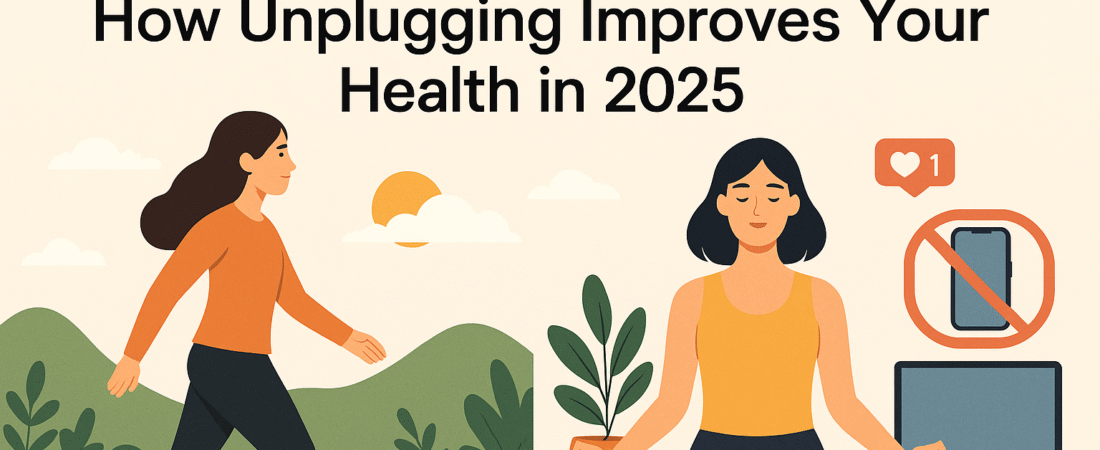
Digital detox is a short or long period of time when you disconnect from digital devices such as smartphones, computers, televisions, and social media platforms. This change in your routine allows you to rest your body and mind. Do not think that life is complete only through technology or social media. The real success of life is to manage everything equally — balancing health, fitness, and screen time. Because health and fitness play a very important role in every mode of life.
In digital detox in 2025, experts have observed that constant use of screens drains mental energy and makes people feel physically unhealthy. Taking short breaks from digital devices helps you feel energetic again and reduces stress levels naturally.
In simple words, the term digital detox means taking a break from digital devices like computers, mobiles, and laptops. You step away from the continuous flow of information, notifications, and distractions that overload your brain — but only temporarily, not permanently. The main goal of digital detox in 2025 is not to reject technology completely but to restore a healthy balance between your online and offline life.
“A digital detox isn’t about rejecting technology — it’s about using it intentionally instead of impulsively.”
If you decide to spend one weekend without your phone, avoiding social media and work emails, and instead focus on reading, nature walks, or spending time with family, that’s a digital detox.
for more health and fitness tips click the button link below and read my article carefully on healmodex.com
Why Digital Detox Is Gaining Popularity in 2025

In the past people used to be something only a few health-conscious or spiritual people did, but now in 2025 it has become a mainstream health trend practiced by many around the world.
Rising Mental Health Awareness & Screen Fatigue
In 2025, the main reason for digital detoxing is the growing awareness among people about the advantages and disadvantages of digital devices. Constant use of screens badly affects both mental and physical health, which is why digital detox in 2025 has become a key part of modern wellness routines.
Questions may arise in your mind about how digital devices affect your mental health. The answer is simple: from scrolling endlessly on social media to checking notifications every few minutes, the average person now spends over 7 hours per day in front of screens.
This constant digital engagement causes what psychologists call screen fatigue — a state of mental exhaustion, irritability, and emotional burnout triggered by too much exposure to screens, apps, and online information. People feel anxious when they’re not online, yet drained when they are. It’s a cycle that quietly steals focus, peace, and productivity. The movement of digital detox in 2025 helps break this unhealthy loop, encouraging people to rest their minds, reduce anxiety, and reconnect with real life.
Research published by the National Institutes of Health (NIH) and Harvard Medical School shows that heavy screen use can:
Increase stress and anxiety levels
Reduce sleep quality due to blue light exposure
Decrease attention span and memory performance
Trigger comparison-based depression on social media
As awareness of these side effects grows, more people are now prioritizing digital detox well-being, making conscious choices to unplug, rest their minds, and create space for mental clarity. Schools, offices, and even governments are introducing wellness campaigns that encourage “phone-free hours” and “screen-free weekends.”
In short, mental health is no longer a luxury — it’s a necessity, and disconnecting digitally has become one of the simplest ways to protect it.
Wellness Trends Shifting Toward “Softcare” & Mindfulness
In 2025, the main reason for digital detoxing is the growing awareness among people about the advantages and disadvantages of digital devices. Constant use of screens badly affects both mental and physical health, which is why digital detox in 2025 has become a key part of modern wellness routines.
Questions may arise in your mind about how digital devices affect your mental health. The answer is simple: from scrolling endlessly on social media to checking notifications every few minutes, the average person now spends over 7 hours per day in front of screens.
This constant digital engagement causes what psychologists call screen fatigue — a state of mental exhaustion, irritability, and emotional burnout triggered by too much exposure to screens, apps, and online information. People feel anxious when they’re not online, yet drained when they are. It’s a cycle that quietly steals focus, peace, and productivity. The growing trend of digital detox in 2025 is helping people fight this cycle by promoting mental rest, mindful breaks, and reduced screen dependency.
In many wellness communities, experts encourage practicing digital detox in 2025 as part of daily self-care — helping individuals recharge their minds, improve sleep, and rebuild real-life connections.
Growth of Digital Detox Retreats & “Analog Travel
In 2025 peoples follow up wellness travel very far consisting of gym and spas. But nowadays it is a trend of digital detoxing and analog travel. Ina world wide people want to unplug completely, lock away phones and rediscover life without screens.
In many luxury places like Bali,Thailand, and the Maldives now offer “no Wi-Fi zones”, silent nature walks, meditation workshops, and screen-free rooms. Guests are encouraged to connect with nature, people, and themselves rather than with notifications or feeds.
Even in major plate unplugged no luxury travel disconnect the wifi. In this way travelers disconnect digitally but connect emotionally with each other.
In fact, according to the Global Wellness Summit 2025 report, demand for digital detox retreats has grown by over 40% worldwide, as more people realize the healing power of stillness and silence.
“Analog travel” encourages people to slow down and feel again. When you’re not capturing every sunset for social media, you begin to truly live in the moment — tasting food fully, hearing the ocean, and feeling gratitude for real connection.
As one traveler described it:
“When I switched off my phone, I found the world switched on
Institutional and Workplace Changes
In many institutes and workplace nowadays also prefer digital detoxing during this time there is no notification, Email send, or messages or digital sabbaticals.
Educational institutions are also integrating digital hygiene and unplugging practices into curricula, making detox awareness part of youth education.
Technology Awareness & Paradox: Using Tech to Fight Tech
Many apps that limit screen time, track usage, or enforce lockouts.are the best tools of digital detoxing.
People are adopting digital minimalism: removing unnecessary apps, muting notifications, or creating “phone-free zones.” These small practices help them regain control.
Health Benefits of a Digital Detox:
Benefit | What Happens | Evidence / Reasoning |
Better Sleep Quality | Less exposure to blue light before bed helps melatonin production | Many studies show screens delay sleep onset |
Reduced Stress & Anxiety | Less information overload, lower social media pressure | Mental rest helps calm the mind |
Improved Focus & Productivity | With fewer distractions, you regain deep focus | You train your brain to resist constant switching |
| More Real-life Connections | Better face-to-face interaction with friends & family | Digital breaks open space for relationships |
Better Eye Health & Posture | Fewer hours staring at screens helps your eyes and body | Less strain, better posture |
| Increased Physical Activity | When digital time drops, physical time often increases | People find time for walking, movement, nature |
How to Do a Digital Detox (Practical Steps)

by applying following habits in daily life you can do a digital detox.
e.g. “No social media after 9 pm” or “No phone for the first hour after waking.”
Schedule Tech-Free Times
Use “digital sabbath” hours, like evenings or one full day on weekend.
Turn Off Notifications
Only allow essential apps — silence the rest.
Replace Screen Time with Healthy Habits
Read a physical book, meditate, go for walks, stretch, and journal.
Use Tools to Help You Limit Usage
App timers, “focus mode” on phones, screen time counters.
Unplug Before Sleep
Stop using screens 1 hour before bed; use real clocks, not phone alarms.
Go Outside / Nature Breaks
Being in nature naturally pulls you away from screens.
Accountability & Social Support
Do this with a friend or family member so you motivate each other.
How to Do a Digital Detox Step-by-Step
- Set daily screen limits
- Create tech-free zones (bedroom, dining table)
- Unplug before bed
- Schedule “no phone Sundays”
- Replace scrolling with reading or exercise
- Track your screen time progress
- Reward yourself for staying consistent
Day Digital Detox Challenge (Printable Plan)
Day | Challenge | Goal |
| 1 | Turn off all notifications | Awareness |
| 2 | No phone before 10am | Morning focus |
| 3 | 1-hour walk without music | Mindfulness |
| 4 | No social media | Mental reset |
| 5 | Read a book | Habit building |
| 6 | Go outdoors | Vitamin D boost |
| 7 | Reflect & note changes | Long-term plan |
Conclusion — Disconnect to Reconnect
In 2025 wellness is not only just beauty hacks,right diet expensive or fancy gyms. But nowadays it’s about protecting your mental clarity and emotional peace in a world that never stops scrolling.a digital detox is a process in which your body and mind reset which they deserve.
By unplugging from constant notifications and endless feeds, you create space for calm, creativity, and connection. Whether it’s through mindful mornings, weekend retreats, or short “no-phone” breaks, each small step away from your screen brings you closer to real well-being.
Remember: you don’t need to quit technology — just use it consciously.
Your phone should serve you, not control you. So take a moment, turn off the noise, breathe deeply, and rediscover life beyond the glow of a screen.
As we learn to unplug and refresh our minds through digital detox in 2025, it’s equally important to care for physical health at every age. For those who want to stay active, strong, and balanced — especially seniors — check out our guide Fitness for Older Adults: Safe, Effective Routines (2025 Guide). It shares simple, safe exercises and wellness tips designed to boost energy, strength, and longevity for older adults.