
Table of Contents
In the beginning, students think that hostel life is very enjoyable — full of freedom, new friendships, and unforgettable memories. But after some time, they face many challenges. Between late-night study sessions, cafeteria food, and tight schedules, maintaining health and fitness in hostels often becomes difficult. Many students gain or lose weight, feel tired, or struggle to stay active because of poor diet routines, the unhealthy hostel environment, and limited space.
The truth is that you do not need to join an expensive gym or a fancy diet. you just apply smart habits in your daily routine of life . It is difficult to quickly workout in your room with easy healthy meal ideas, because there is no privacy in your hostel room. In this i tell you how to stay energetic, focused, and healthy while living in a hostel even on a tight student budget.
Eat Smart – Even Without a Kitchen
In hostels there is no personal kitchen for every individual.but that does not mean you have to instant survive on noodles or biscuits.With a little creativity you can cook a healthy meal in the kitchen in your room using just a kettle, sandwich maker, or electric pan.
Quick & Healthy Meal Ideas
1. Protein Breakfast Bowls
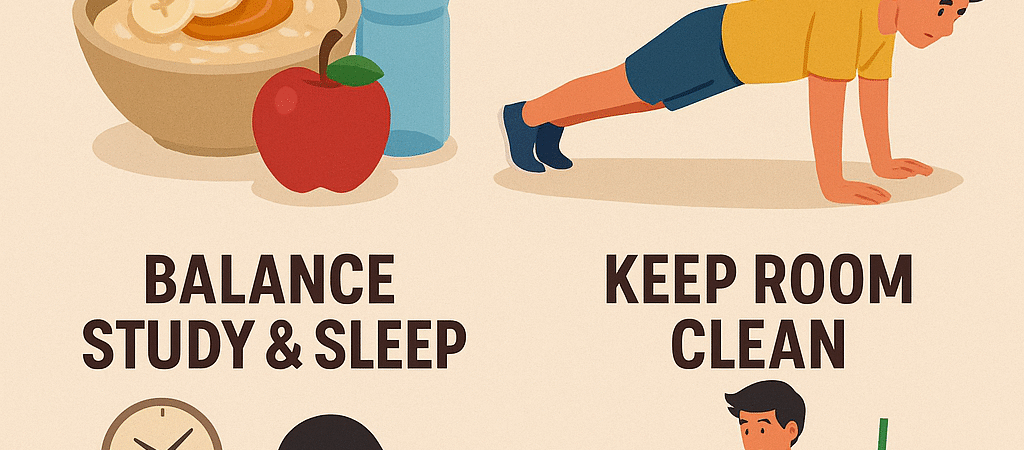
Mix oats, milk, banana slices, and a spoon of peanut butter. It keeps you full for hours and boosts energy for morning classes.
2. Smart Snacking
Keep roasted chickpeas, almonds, or homemade trail mix in airtight jars. They’re cheaper and healthier than chips or cookies.
3. Instant Kettle Recipes
Use your kettle to make boiled eggs, vegetable soup, or even instant oats with dry fruits. Add a pinch of cinnamon or honey for flavor.
4. Sandwich & Wrap Magic
Whole-grain bread, peanut butter, cucumber, and boiled egg make a filling sandwich. Wrap it in foil for a quick grab-and-go lunch.
5. Night-Time Light Meals
Try yogurt with fruits, or milk with cornflakes before bed — light, easy to digest, and great for recovery.
Pro Tips
Always keep a reusable water bottle and drink at least 2 liters daily.
Avoid junk food from canteens more than twice a week.
Replace fizzy drinks with lemon water, green tea, or plain milk.
Once a week, plan a “healthy shopping list” — oats, eggs, fruits, dry fruits, milk.
for more health and fitness tips click the button link below and read myh article on HealModeX.com
Exercise in Small Spaces for health and fitness in hostels
No need for any type of hesitation. You can do daily exercise for only 15 minutes in your room, corridor, or hostel courtyard. All you need is your body and 15 minutes a day.
Quick Hostel-Friendly Workout Plan
Morning Routine (10–15 minutes)
- 20 Jumping Jacks — to wake your body up
- 15 Squats — strengthen legs and improve balance
- 10 Pushups — build upper body strength
- 20-Second Plank — core stability
- 10 Lunges (each leg) — tone your lower body
Evening Routine (optional)
- 10 Burpees — burn calories fast
- 15 Sit-ups — strengthen abs
- Skipping for 5 minutes — best cardio in small space
Stretch & Relax
Hostel rooms can make you feel stiff after hours of sitting or studying. Try these before bed:
- Neck rolls and shoulder shrugs to release tension
- Forward bends for your back
- Deep breathing for 2–3 minutes to calm your mind
Pro tips
Play upbeat music while exercising — it boosts mood and motivation.
Stay consistent — even 15 minutes daily is better than 2 hours once a week.
Avoid heavy exercise right before sleeping — do light stretching instead.
Balance Study and Sleep
In the beginning, students think that hostel life is very enjoyable — full of freedom, new friendships, and unforgettable memories. But after some time, they face many challenges. Between late-night study sessions, cafeteria food, and tight schedules, maintaining health and fitness in hostels often becomes difficult. Many students gain or lose weight, feel tired, or struggle to stay active because of poor diet routines, the unhealthy hostel environment, and limited space. That’s why learning how to maintain health and fitness in hostels is essential for every student who wants to stay energetic and focused during their academic journey.
Why Sleep Matters
When you sleep, your body repairs muscles, your mind resets, and your energy levels recover. Skipping sleep doesn’t make you productive — it makes you tired, moody, and less focused.
Tips to Fix Your Schedule:
- Sleep 7–8 hours daily — same bedtime every night.
- Avoid caffeine or energy drinks after 7 PM.
- Keep your phone away from your bed (use an alarm clock instead).
- Wake up early and revise in the morning — your brain absorbs better.
- Take a 10–15 minute power nap in the afternoon if needed.
Study Smarter, Not Longer
- Use the Pomodoro Technique — 25 minutes study, 5 minutes break.
- Revise before sleeping; it improves memory retention.
- Don’t multitask — finish one topic before jumping to another.
- Study in a well-lit area to reduce eye strain.
Pro Tip
A calm mind equals a healthy body. End your day with soft music, light stretching, or 5 minutes of journaling. You’ll sleep better and wake up fresher ready to take on hostel life with full energy.
Stay Clean and Stress-Free

Hostel life turns messy and dirty very rapidly, which directly affects health and fitness in hostels. Almost two or three people live in the same room, and when cleanliness is ignored, it creates stress, tiredness, and low energy. Living in a messy space not only makes you feel lazy but also damages your health and fitness in hostels, leading to poor concentration and frequent illnesses. A neat and organized room supports better sleep, a calm mind, and overall health and fitness in hostels, helping students stay active and focused throughout their academic life.
Keep Your Space Fresh and Hygienic
- Clean your room twice a week: Sweep the floor, dust your shelves, and wipe your study table. A 15-minute cleaning habit can completely change the vibe of your hostel room.
- Change your bedsheet regularly: Dirty sheets collect sweat and bacteria that cause skin problems. Wash and replace them every 7–10 days.
- Organize your belongings: Use small boxes or bags to keep your books, clothes, and accessories separate. A tidy desk helps you study with focus.
- Freshen up your air: Open windows in the morning; sunlight kills germs and lifts your mood.
- Personal hygiene matters: Shower daily, trim nails, and use deodorant or body spray — you’ll feel confident and fresh all day.
Manage Stress Before It Manages You
Studying away from home, meeting deadlines, and adjusting to hostel life can be stressful. But stress directly affects your health — from sleep quality to digestion. Here’s how to stay emotionally balanced:
- Start your day with gratitude: Write down 3 things you’re thankful for — it rewires your brain toward positivity.
- Do deep breathing or meditation for 5 minutes: It relaxes your body and calms racing thoughts.
- Take breaks wisely: After long study sessions, go for a short walk or listen to soft music.
- Avoid comparing yourself with others: Everyone has a different journey; focus on your own growth.
- Talk it out: Share your worries with friends or family — emotional support is the best therapy.
Pro Tips for a Stress-Free Hostel Life
Keep a small indoor plant near your study table — it reduces anxiety and purifies the air.
Hang motivational quotes or your weekly goals on the wall — they keep you inspired.
Keep a “no-complaint day” once a week and focus only on positives.
Sleep early and wake up early .It resets your mood and keeps you disciplined.
Hydration
In hostels many students forget to drink enough water.even they follow good habits but do not drink water properly. Sometimes busy in study , scrolling your mobile phone, these types of habits quietly affect your brain and body.
Why Water Matters
Water keeps every part of your body working smoothly — from digestion to memory. It regulates temperature, flushes toxins, and helps nutrients reach your muscles and brain. When you’re dehydrated, you feel tired even without doing much.
Signs You’re Dehydrated:
- Constant tiredness or dizziness
- Dry lips or skin
- Headache or muscle cramps
- Lack of focus during study sessions
Simple Hydration Habits for Hostel Students
- Keep a water bottle with you 24/7.
Refill it 3–4 times a day. Use a 1-liter reusable bottle so you can track your intake easily. - Drink before you feel thirsty.
Thirst means your body is already dehydrated. Sip water throughout the day instead of chugging it at once. - Add flavor naturally.
Infuse your water with lemon, mint, cucumber, or orange slices — healthy and refreshing. - Replace sugary drinks.
Skip sodas and energy drinks. Choose water, lemon water, or green tea for hydration and better metabolism. - Hydrate before bed & after waking up.
One glass of water in the morning boosts alertness; one before bed maintains hydration overnight.
Bonus Tip
Try setting a water reminder app or alarm on your phone every 2 hours.
After exercise, drink water with a pinch of salt or a natural electrolyte drink to restore minerals.
Eat hydrating foods like watermelon, cucumber, and oranges perfect hostel snacks.
for more health and fitness tips click the below button link and read my article on HealModeX.com
Drink | Benefits |
| Lemon Water | Detox + Digestion |
Green Tea | Focus + Fat Burn |
Milk | Calcium + Sleep |
Build a Supportive Routine
Discipline beats motivation. A simple, repeatable routine keeps your energy stable, your mind focused, and your fitness on track—even in a noisy hostel.
Time | Habit | Why it helps |
6:30 am | 1 glass water + sunlight | Rehydrate, reset body clock |
7:00 am | 10–15 min workout | Metabolism + mood boost |
| 8:00 am | Protein breakfast | Steady energy for classes |
| 1:00 pm | Balanced lunch | Prevents afternoon slump |
| 4:00 pm | 15-min walk/stretch | Breaks sitting fatigue |
6:30 pm | Light sport / skipping | Cardio without a gym |
8:00 pm | Simple dinner | Better sleep, better recovery |
| 10:00 pm | Journal + plan tomorrow | Lowers stress, clear mind |
11:00 pm | Sleep (no screens) | Memory + muscle repair |
Habit Stacking (make it automatic)
- After brushing → 10 squats + 10 pushups
- After every 25-min study block → 10 deep breaths + 20-sec stretch
- After dinner → 10-min slow walk in the corridor
- Before bed → 3 lines of gratitude + next day’s top 3 tasks
Weekly Win Plan (hostel-friendly)
- Mon: Lower-body (squats, lunges)
- Tue: Core (planks, sit-ups)
- Wed: Upper-body (pushups, dips on chair)
- Thu: Cardio (skipping/jog)
- Fri: Mobility (yoga/stretch)
- Sat: Sports with friends (badminton/football)
- Sun: Reset day (clean room, laundry, meal prep + plan week)
Sunday Reset Checklist
- Change bedsheet + tidy desk
- Refill snack box (nuts, roasted chana, oats)
- Wash bottle + lunch box
- Set alarms + pin your timetable on the wall
- Write goals for the week (study + fitness)
Control the Biggest Routine Killers
- Late-night screens → Use blue-light filter; park phone away from bed
- Random snacking → Keep healthy snacks visible; hide junk
- Inconsistent sleep → Same sleep/wake time daily (even on weekends)
- Peer pressure → Say “I’ll join after my 10-min workout”—set boundaries politely
Accountability that sticks
- Buddy system: Share daily check-ins (steps, water, workout) with a hostel friend
- Wall tracker: Mark for workout/water/sleep on a paper grid visual progress = motivation
- Micro-rewards: 7-day streak → treat yourself to a healthy smoothie or new skipping rope
30-Day Hostel Fitness Challenge (print-ready)
- Daily: 1-liter water before noon, 10–15 minutes exercise, lights out by 11 pm
- Weekly: One sport day + one room-clean reset
- Goal: 24/30 days completed = success (progress > perfection)
Conclusion
Staying fit and healthy in hostels is not difficult for students if they follow smart habits daily. The key to maintaining health and fitness in hostels is consistency and balance between study, rest, and exercise. When you stay disciplined, even a small space can support your goals of health and fitness in hostels without needing an expensive gym or special diet. Remember, your physical and mental well-being are connected — so plan your meals, workouts, and sleep smartly to protect your health and fitness in hostels for long-term success. Start small, eat smart, move daily, sleep on time, and take care of yourself — because your body is your real home, no matter where you live.
If you’re looking to take your hostel-friendly routine even further, don’t miss our deep dive on wearable fitness technology in 2025 — how smart watches, fitness bands and other compact gadgets can support your journey of health and fitness in hostels. Check it out here: Wearable Fitness Tech in 2025 and discover practical gear suggestions that fit student budgets and hostel lifestyles.